
Search Delaware Criminal History
Delaware criminal history records are kept by the State Bureau of Identification under the Delaware State Police. The SBI is the state's central repository for arrest, charge, and disposition data across all three counties. Most people who need a Delaware criminal history record start at the SBI office, a Superior Court clerk, or the CourtConnect online portal. This page explains where to go, who holds what, and how to get a certified copy of your own Delaware criminal record without running in circles.
Delaware Criminal History Overview
Delaware Criminal History at the SBI
The State Bureau of Identification is the one office that can print a certified Delaware criminal history. SBI runs under the Delaware State Police and takes prints at nine sites across the state. Sites sit in Wilmington, Newark, Middletown, Dover, Milford, Georgetown, and Seaford. Each site uses the IdentoGO system for scheduling. You pick a time, you show up, you get printed. That is the core of the Delaware criminal history process.
Fees are set by the agency and paid at the time of service. A certified State of Delaware Criminal History is $72.00. A combined State of Delaware and Federal Criminal History is $85.00 when it is required by law. The federal check has to be allowed by statute, so most people only need the state check. You cannot pay with a personal check. Cash, credit cards, debit cards, money orders, and company checks work. The agency sends results to the requester, not always the applicant.
What to bring to your SBI visit:
- Photo ID (driver license or state ID from any state)
- Service code from the agency that asked for the check
- Payment in an allowed form
- Appointment confirmation from IdentoGO
A Personal Criminal History Report uses service code 27RVGT. Other codes cover permits, expungement filings, volunteer fire service, and licensing. If you don't have a code, call the entity that asked for the check. The SBI will not take prints without one. The agency added the rule to cut down on duplicate files that were being sent to the wrong recipient.
A lead-in worth noting: the Division of Professional Regulation cannot hand you a copy of your CBC under federal law. Per the DPR background check page, the only time DPR will share a copy with the applicant is when you need to dispute a charge for Delaware licensure. Every other request has to go through SBI directly with the correct service code. The DPR page at dpr.delaware.gov walks through service codes and offers a quick help guide for IdentoGO.
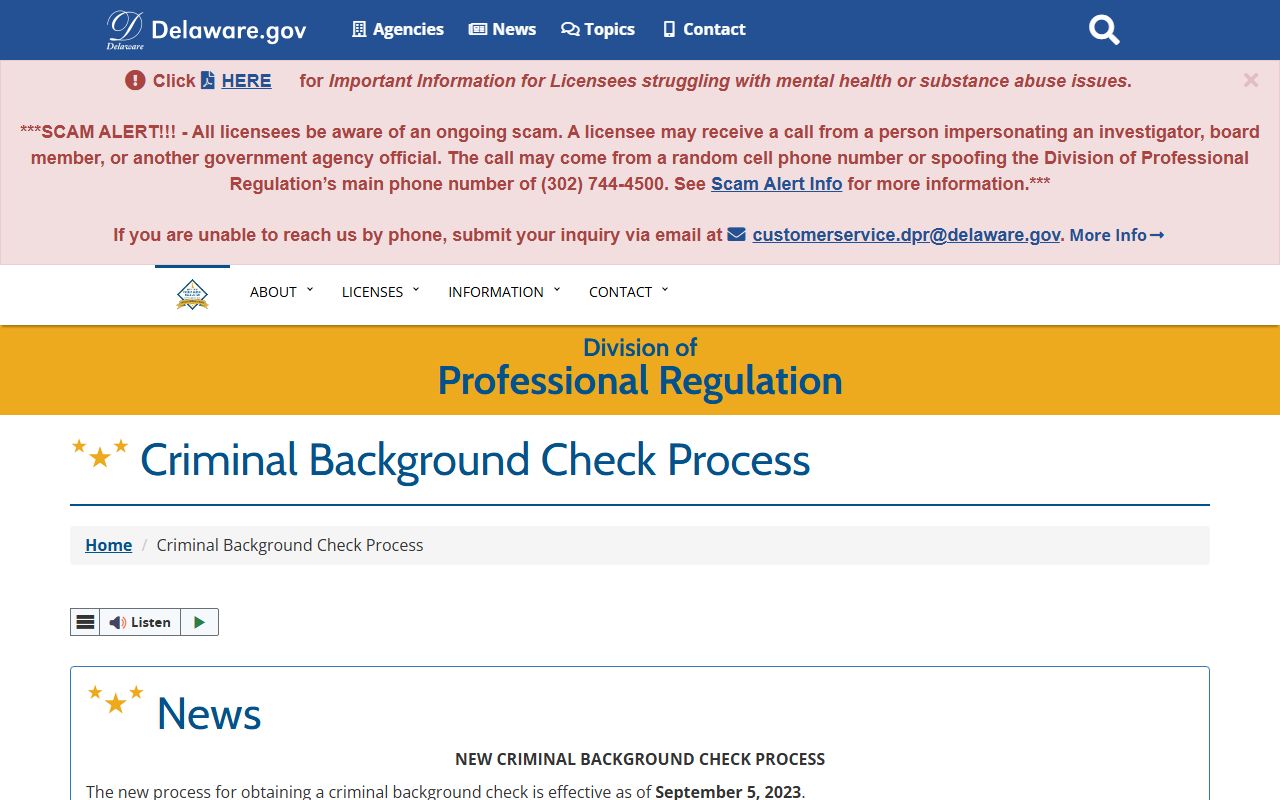
DPR uses the same IdentoGO platform as SBI, so the workflow feels similar. The main twist is that DPR results route to the licensing board, not to the applicant. Keep your confirmation in case the board needs proof that you showed up.
Note: SBI results are not returned on the spot at most locations. Most reports take several business days, and volunteer fire checks at Kent can be same-day.
Delaware Courts and Criminal History
The Delaware Judiciary runs a pyramid of courts. At the base sit the Justice of the Peace courts, which handle traffic cases and preliminary hearings. Above them, the Court of Common Pleas handles misdemeanors and civil cases between $15,000 and $50,000. The Superior Court is where felony cases land. All three levels feed into the same criminal history record for a given person. The Supreme Court hears appeals, and the Court of Chancery runs in parallel on equity matters.
Superior Court is the trial court of general jurisdiction for felonies. If someone was convicted of a serious crime in Delaware, the Superior Court file is the primary source. Case files include indictments, motions, plea paperwork, sentencing orders, and disposition sheets. For the Delaware criminal history on your own record, the court file is the long form and the SBI report is the short form.
Online case access runs through CourtConnect. The site covers the Superior Court, Court of Common Pleas, and Justice of the Peace Court statewide. You can search by party name, case number, or attorney. The site displays case types, filing dates, charges, scheduled events, and disposition information. The judiciary contracts with Avenu Insights & Analytics to run the platform. You can register for a free account to see more detailed case data.
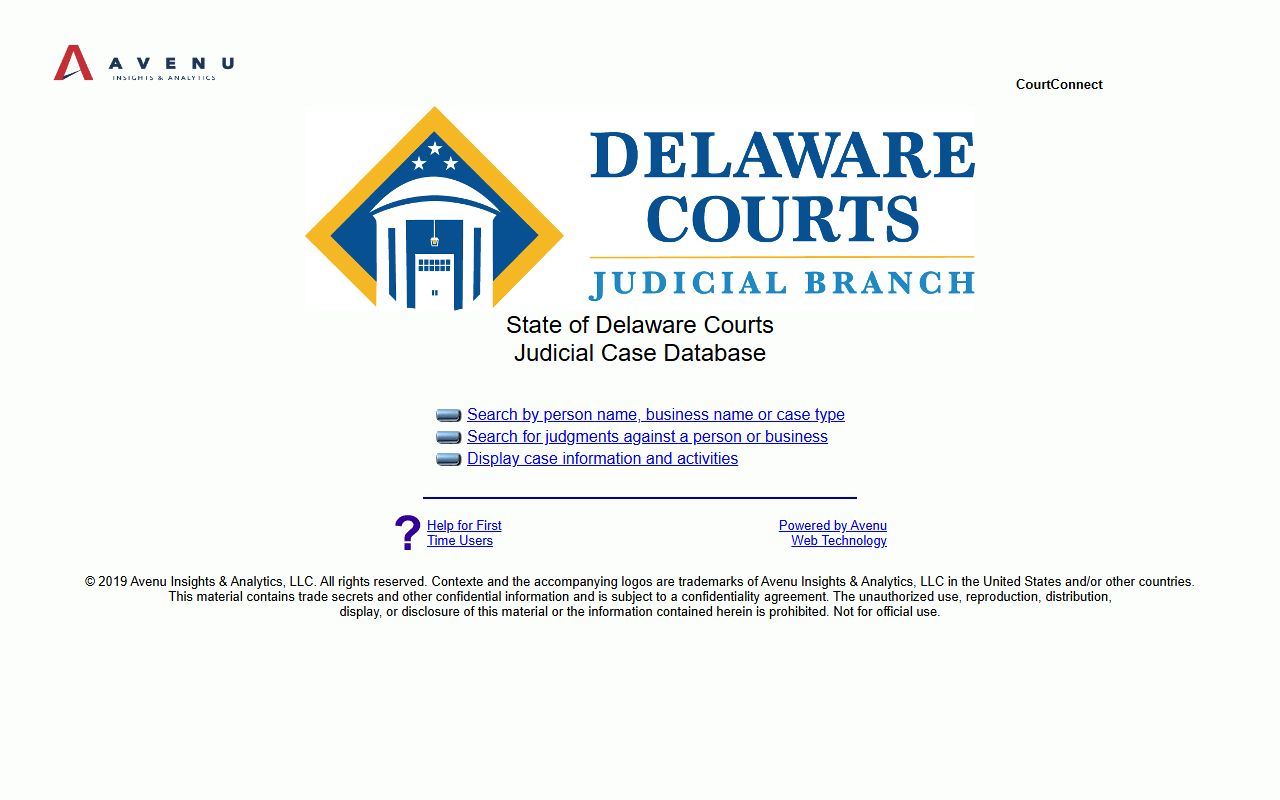
The portal at courtconnect.courts.delaware.gov runs 24/7. Some sensitive info is redacted from online records, and recent filings may not have made it into the index yet. For the full file, you still need to call the court clerk or visit in person during public counter hours. Most courts are open from 8:30 AM to 4:30 PM on weekdays.
DELJIS and the Delaware Criminal Records System
The Delaware Criminal Justice Information System is the back-end database that ties it all together. DELJIS stores arrest records, crime reports, and missing persons records. The system pulls data from police, courts, and the Department of Correction. The rulebook that sets up DELJIS is 11 Del. C. § 8605. Full database access is limited to criminal justice agencies, but the public touches DELJIS indirectly every time SBI runs a report.
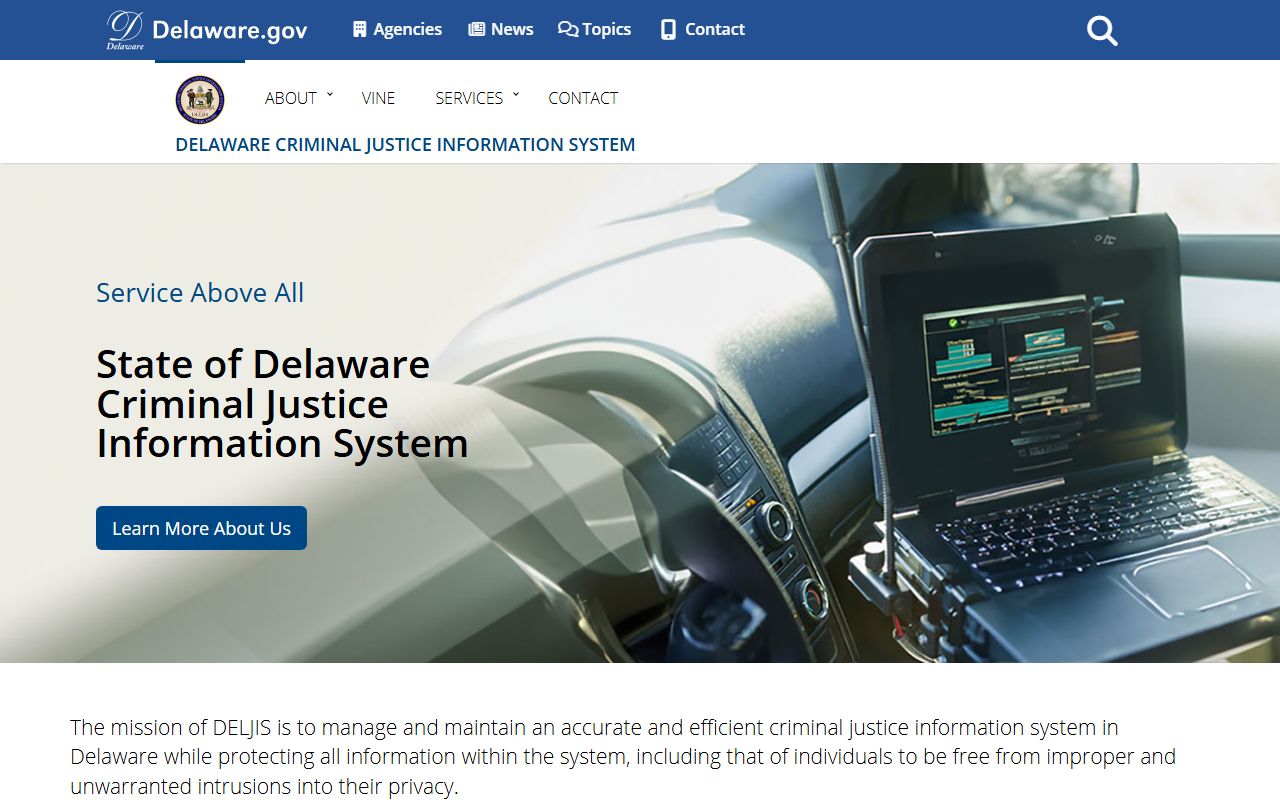
DELJIS also routes federal criminal background checks. The State Police Criminal History Section sends requests to the FBI through DELJIS. When you see an FBI Criminal Background Check Civil Applicant Response, it traveled the DELJIS wire both ways. Without this plumbing, there would be no way to combine state and federal records into one report.
For victim notification, the state uses VINE (Victim Information and Notification Everyday). You can register at vinelink.com to track the status of a specific inmate. The Department of Correction handles the source data for those alerts. VINE and DELJIS share information but are separate programs.
Delaware Department of Correction Records
The Delaware Department of Correction runs the state's prisons. Three facilities handle most bookings. Howard R. Young Correctional Institution in Wilmington covers New Castle County. James T. Vaughn Correctional Center in Smyrna covers Kent County. Sussex Correctional Institution in Georgetown covers Sussex County. Each site holds its own booking records, and those records feed into the statewide criminal history database.
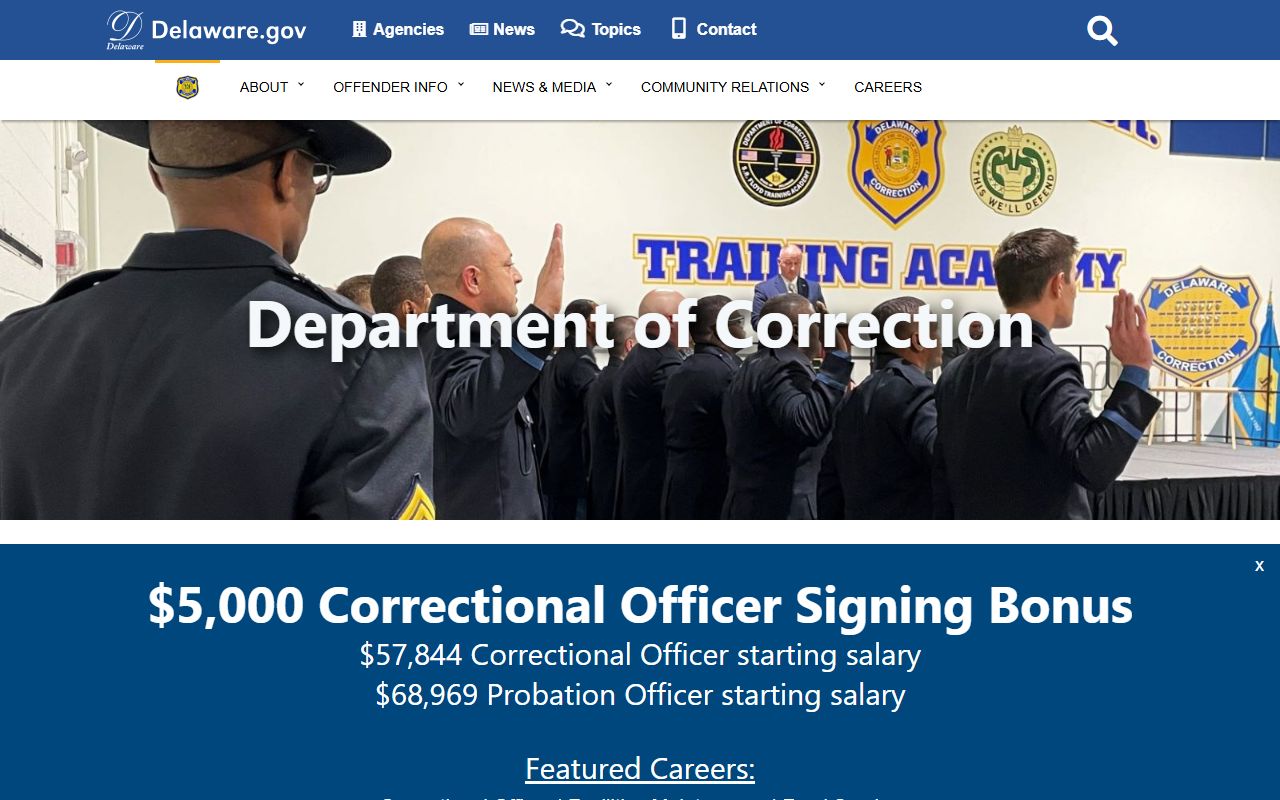
The inmate locator on the DOC site lets you confirm current custody status, facility location, and release dates. The DOC only gives out jail records to victims, the accused, or legal representatives of the accused. General public access to jail data runs through VINE instead. You can search by name and birth date. The result shows current housing and scheduled release.
Visitation needs to be scheduled in advance. Each facility posts its own rules about what visitors can bring and when visits happen. If you are looking for past incarceration records that are no longer active, you have to send a formal request to DOC or pull the disposition through the court file. The DOC page explains the process.
Delaware Sex Offender Registry
The Delaware Sex Offender Central Registry is maintained by the Delaware State Police. The registry is authorized under Delaware Code Title 11, Chapter 41. You can search by name, address, city, county, or zip code. The registry lists offender names, photographs, addresses, physical descriptions, vehicle info, employment info, and offense details including the statute violated and conviction date.
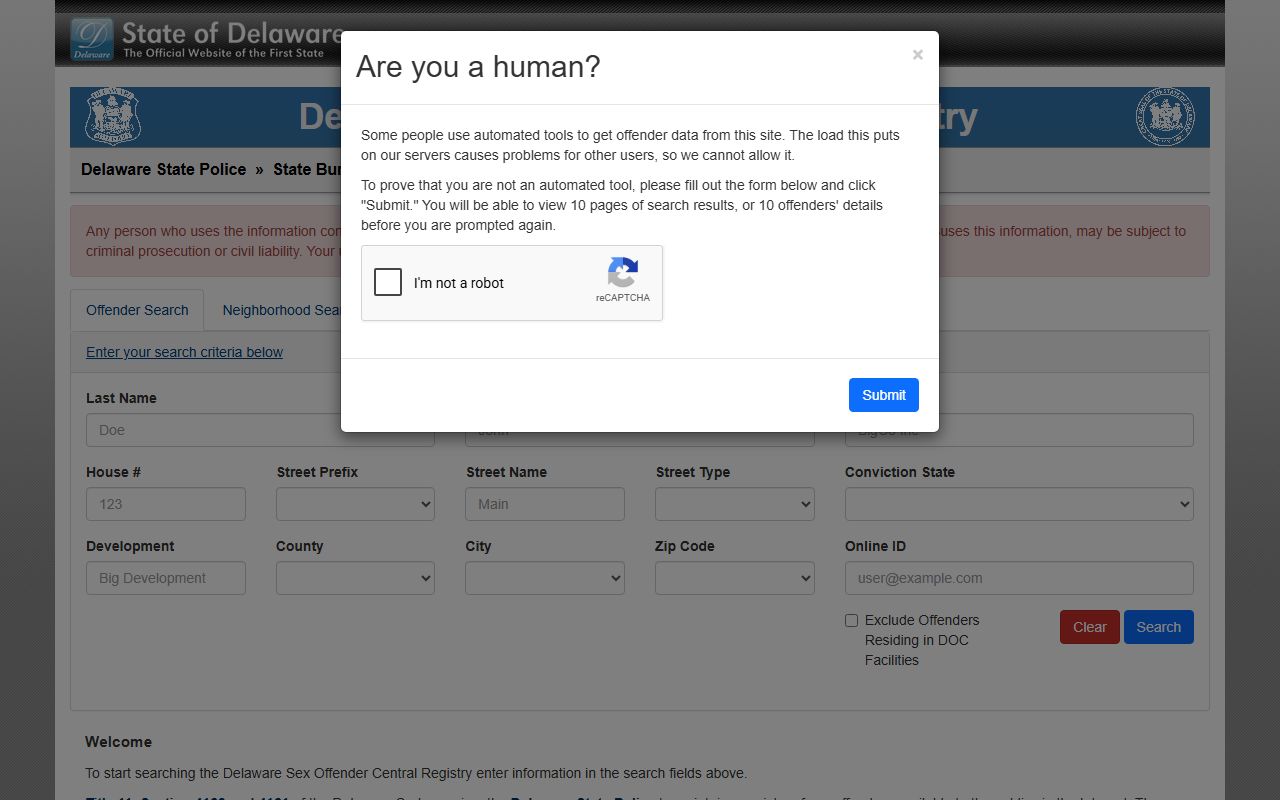
Email alerts are available. You can sign up to get a notice when an offender registers in your area or when a listed offender's information changes. Failure to register is itself a crime in Delaware. The registry is updated as new data comes in from police agencies that handle the verification visits.
Delaware Criminal History Expungement
Delaware criminal history law shifted in a big way in 2019 and again in 2021. The Title 11, Chapter 43, Subchapter VII of the Delaware Code now covers the full expungement process. Section 4371 states the policy: a criminal history is a hindrance to a person's present and future ability to obtain employment, housing, education, or credit. The subchapter is meant to protect people from unwarranted damage when the record keeps following them.
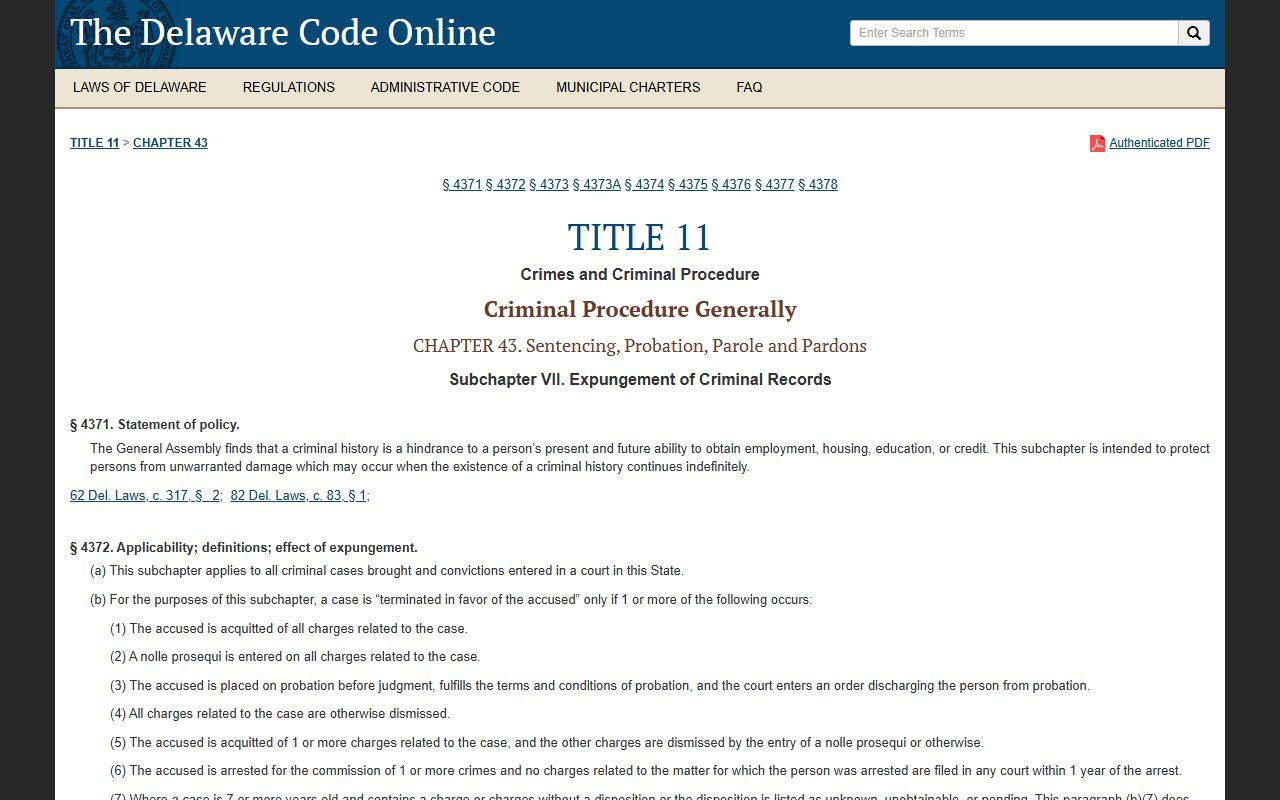
Section 4372 describes when a case counts as terminated in favor of the accused. That happens when all charges are dismissed, when a nolle prosequi is entered, when probation before judgment is completed, when there is an acquittal, or when charges were never filed within one year of arrest. These cases are the easiest to clear.
Mandatory expungement under Section 4373 covers cases terminated in favor of the accused and certain violations and misdemeanors. Discretionary expungement under Section 4374 covers misdemeanors and felonies under specific conditions. Section 4375 covers discretionary expungement after a pardon. Each track has its own paperwork, and SBI is the office that processes the application.
The fee to file an expungement application is $72.00. If SBI finds the case is eligible for mandatory expungement, the applicant gets signed paperwork back and returns it within 30 days with a $75.00 money order made out to Delaware State Police. The SBI service code for expungement applications is 27S23V. You have to pay all outstanding fines, fees, and restitution before the court will sign off, though the court can waive those costs if the non-payment is not willful.
The Clean Slate Act took effect on August 1, 2024. Under that law, some convictions are automatically expunged after a set time period. Drug possession convictions drop off after 5 years. Other drug convictions, burglary tool possession, counterfeit controlled drug sales, and unauthorized credit card use drop off after 10 years. Other felonies, DUIs, domestic violence offenses, and sex offenses cannot be cleared under the automatic track, but may still be eligible for discretionary expungement. The Collateral Consequences Resource Center has a detailed summary of the Delaware restoration-of-rights process.
Note: Expunged records are destroyed, segregated, or placed in SBI custody under Section 4373, and cannot be released outside the narrow list of permitted inquiries.
Public Records and Delaware FOIA
The Delaware Freedom of Information Act lives in Title 29, Chapter 100 of the Delaware Code. Under Section 10002, a public record is pretty much any record a public body holds that relates to public business. Criminal records held by Delaware police agencies are public unless a court order or statute seals them. SBI keeps the master index, but each agency can handle its own FOIA requests for police reports, arrest records, and crime data.
Section 10003 sets the response time. A public body must respond to a FOIA request within 15 business days. The agency can charge fees for searches, copies, and certifications. Juvenile records, sealed cases, and some investigative files are not released. The law does allow fee waivers in certain cases.
Use of force by police is handled separately. The Delaware Attorney General's Division of Civil Rights and Public Trust runs an independent review of all deadly force incidents. Final reports are made public and describe the video footage, ballistics, toxicology, witness statements, and police interviews in each case.
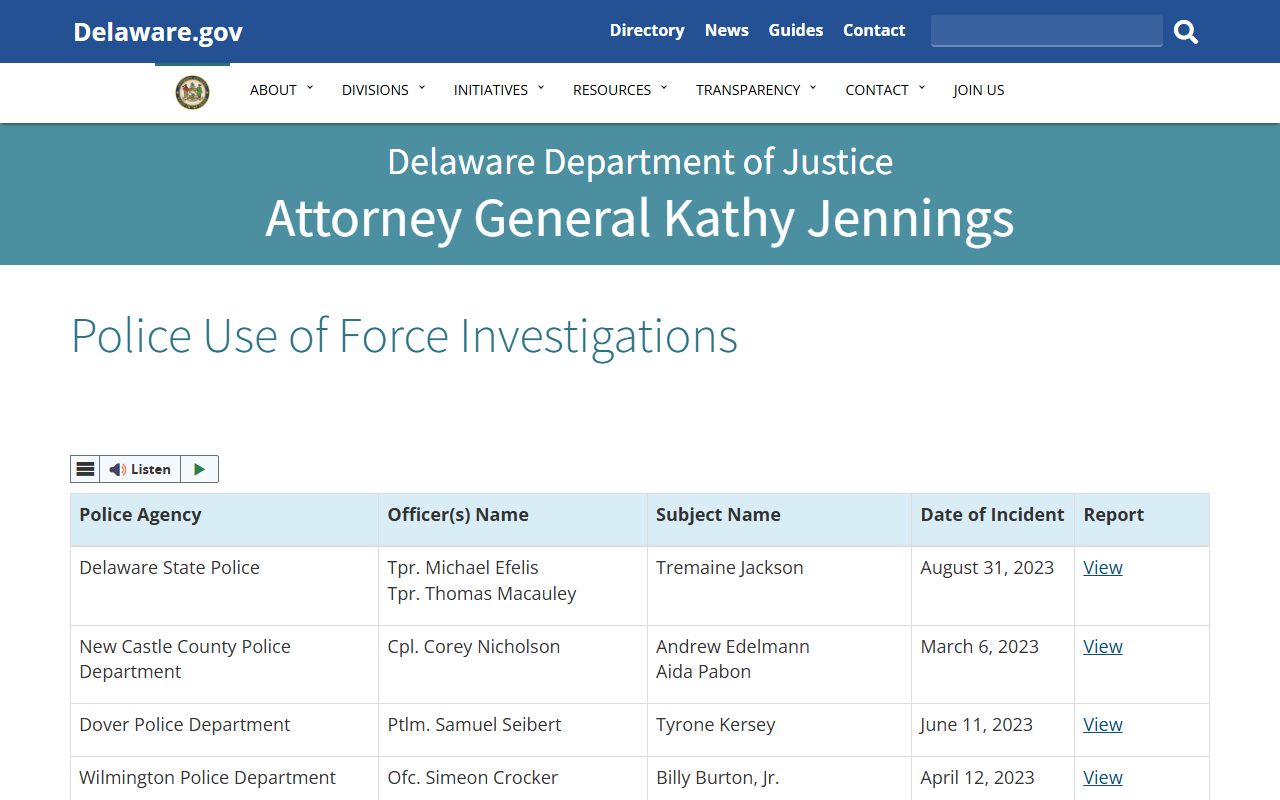
The DCRPT is separate from the Criminal Division, so the team that looks at the police conduct is not the same team that prosecutes crimes. That split keeps the criminal history review honest.
Criminal History Unit and Child Protection
The Criminal History Unit runs under the Delaware Department of Services for Children, Youth and Their Families. CHU handles checks for more than 3,400 public and private employers, agencies, and homes that serve children and vulnerable adults. The unit works from SBI and FBI fingerprinted reports, subsequent arrest records, in-state and out-of-state child abuse reports, and the sex offender registry.
The Child Protection Registry Portal is at childprotectionregistry.delaware.gov. It lets employers register and request checks for individuals working with children. Results come back within 15 days. The fee is $14.00. The portal is a distinct tool from the SBI process, and a full background check for someone working with kids usually pulls results from both pipelines.
CHU's own framework pulls from state and federal laws. Delaware requires criminal history checks for foster and adoptive parents, child care licensure applicants, youth camp staff, residential child care workers, and child placing agency employees. The CHU issues eligibility determinations and handles administrative reviews when someone wants to contest a finding. It is separate from general background checks, but it uses the same SBI fingerprint process as the starting point.
Delaware State Police Services
The Delaware State Police run a long list of services that touch criminal history work. Troop 2 sits in Newark and covers New Castle County. Troop 3 sits in Dover and covers Kent County. Troop 4 sits in Georgetown and covers Sussex County. Each troop hosts a SBI desk for fingerprinting, though hours and appointment rules differ by site.
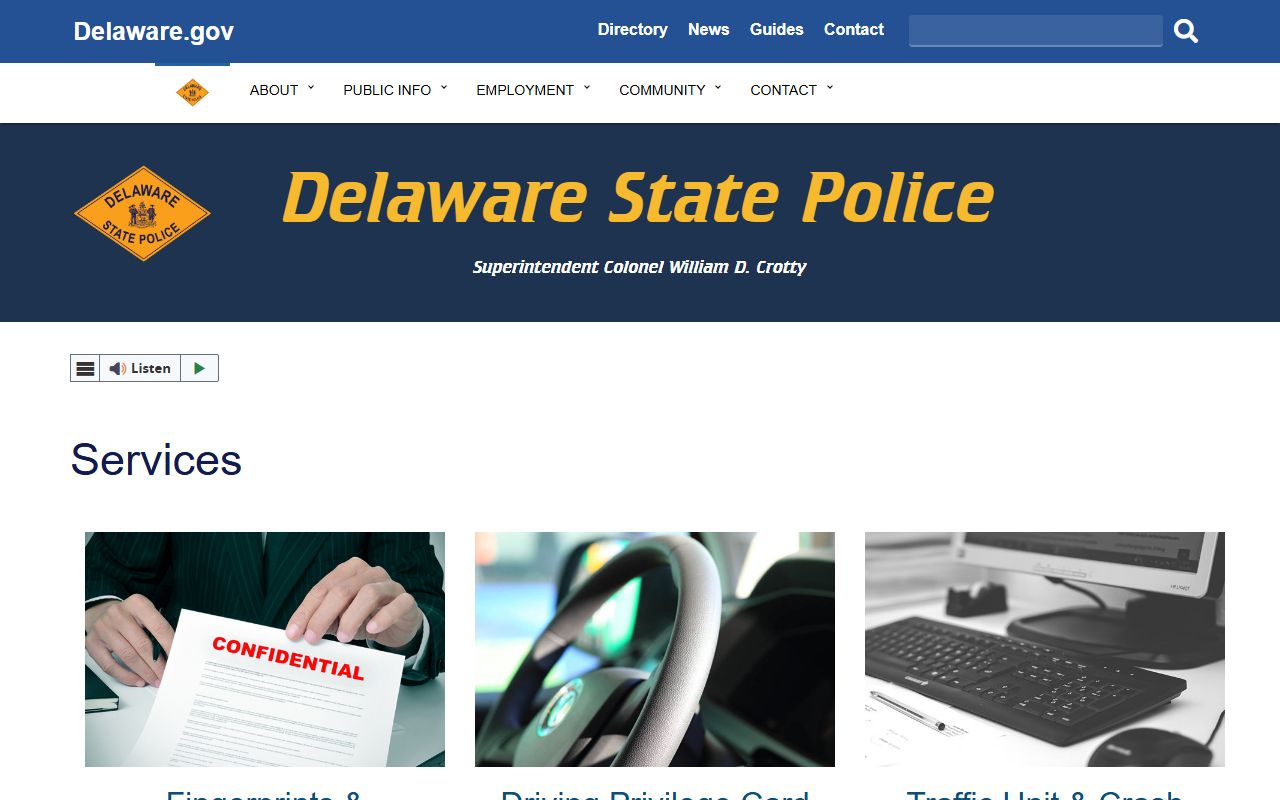
Troop 3 is the only SBI site open every weekday without an appointment. The rest need a call to 1-800-464-4357 or 302-739-2528. State Police also handle concealed carry permits, volunteer fire service checks, and the driving privilege card program for undocumented immigrants. Each program has its own SBI service code.
The DSP Traffic Unit handles serious crash investigations. Traffic data can show up in a Delaware criminal history when a crash leads to a felony charge such as DUI causing injury or vehicular homicide. The Traffic Unit pulls crash reports, ticketing data, and collision reconstruction records into the court file when cases are prosecuted.
SBI Certified Criminal History Details
The SBI landing page explains the full fingerprint workflow. The page links out to IdentoGO for scheduling, lists every service code, and describes the payment methods. A certified criminal history is the report most people need for licensing, housing, and interstate moves.
For records heading overseas, there is one extra step. After SBI completes the report, the applicant goes to the Dover office at 600 S. Bay Road to have the document sealed for Apostille. From there, the Division of Corporations handles the Apostille or authentication stamp. Without that second stamp, most foreign agencies will reject the report.
Tip: Volunteer fire company applicants at the Kent County SBI office can get same-day results if you tell the staff the check is for fire service at check-in.
Delaware Criminal History by County
Delaware has three counties. Each one has its own Superior Court, Sheriff's Office, and SBI-connected State Police troop. Pick a county below to find local contact info, court addresses, and fingerprinting sites for Delaware criminal history requests in that area.
Criminal History Records in Delaware Cities
Residents of Delaware cities request criminal records through their local police department and the county Superior Court. Pick a city below for criminal history search info for that area.